
Rechargeable hearing aids offer all the benefits of modern digital hearing technology without the need to change small disposable batteries regularly.
Simply place your hearing aids in their charger when you go to bed, and they should be ready to wear again the following morning. It is an easy routine that can make everyday hearing care simpler and more convenient.
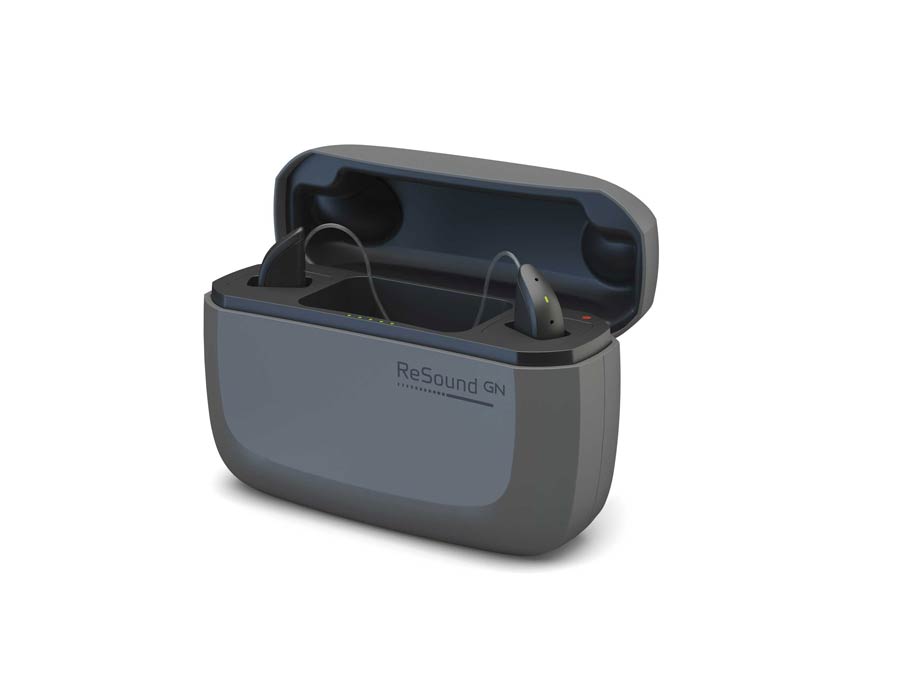
How do rechargeable hearing aids work?
Most modern rechargeable hearing aids contain a built-in lithium-ion battery. Instead of removing and replacing the battery, you recharge the complete hearing aid in a compatible charging unit.
A full charge is designed to provide all-day use on many models. However, the precise battery life will depend on:
- The hearing aid model
- Your hearing settings
- How many hours you wear the devices
- How frequently you stream calls, music or television
- Your use of wireless accessories
- The age and condition of the rechargeable battery
- The surrounding temperature and listening environment
Your audiologist can explain the expected charging time and battery performance of any model you are considering.
Recharge overnight
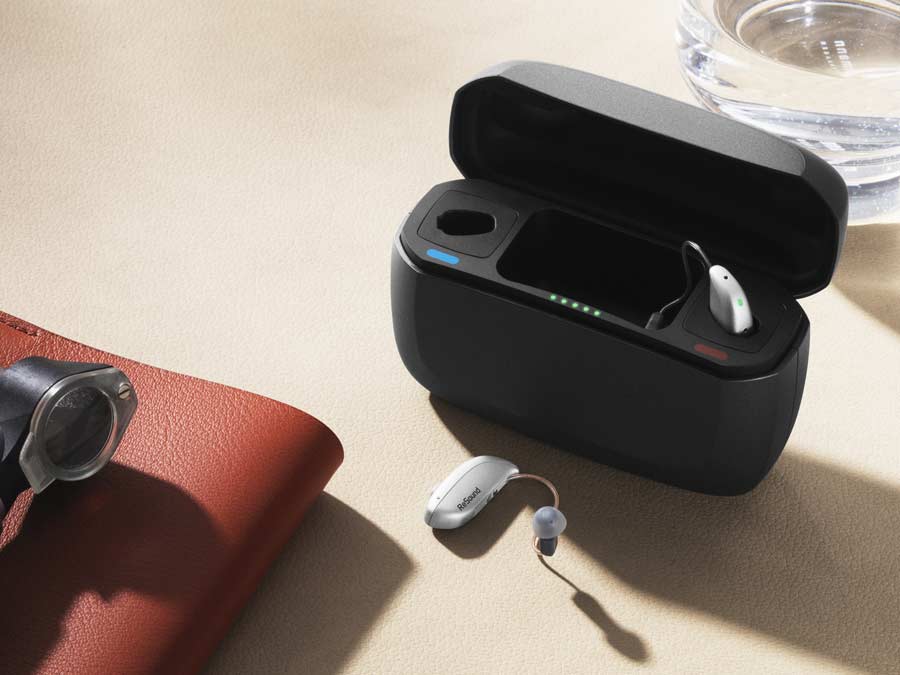
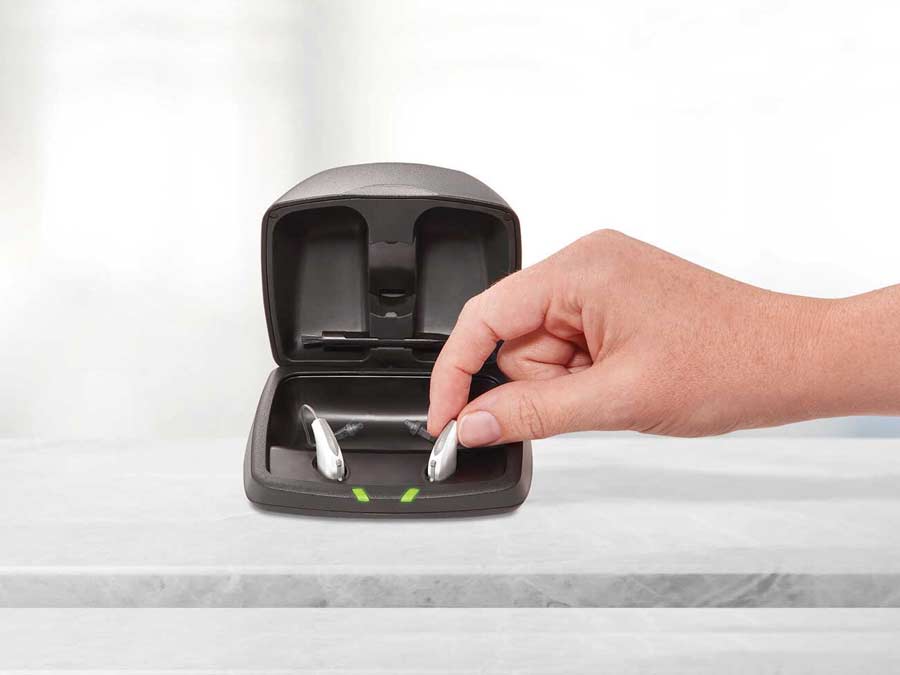
Most rechargeable hearing aids take approximately three to four hours to charge fully. Placing them in the charger overnight means they can charge while you sleep and be ready for the next day.
Many chargers also act as protective storage cases. Depending on the model, indicator lights may show when the hearing aids are positioned correctly and when charging is complete.
It is important to connect the charger to a reliable power supply and follow the manufacturer’s instructions.
All-day battery performance
Depending on the model and how it is used, a full charge may provide approximately 20 to 30 hours of operation.
Regular Bluetooth® streaming can reduce this time because transmitting calls, television and other audio uses additional power. People who stream for long periods may need to recharge sooner than those using their hearing aids mainly for conversation.
Battery capacity can also reduce gradually as the hearing aids age. Rechargeable batteries commonly last for several years, but the lifespan and replacement arrangements vary between manufacturers.
Quick and portable charging
Selected hearing aids offer a quick-charge function that can provide several hours of use after a short charging period. The exact charging speed and resulting use time vary by model.
Portable charging cases are also available with certain hearing aids. These cases store additional power, allowing you to recharge your devices without connecting the case to the mains every time. They can be particularly useful when travelling or spending long periods away from home.
Your audiologist can help you decide whether a standard desktop charger or a portable charging case would suit you better.


What styles are available?
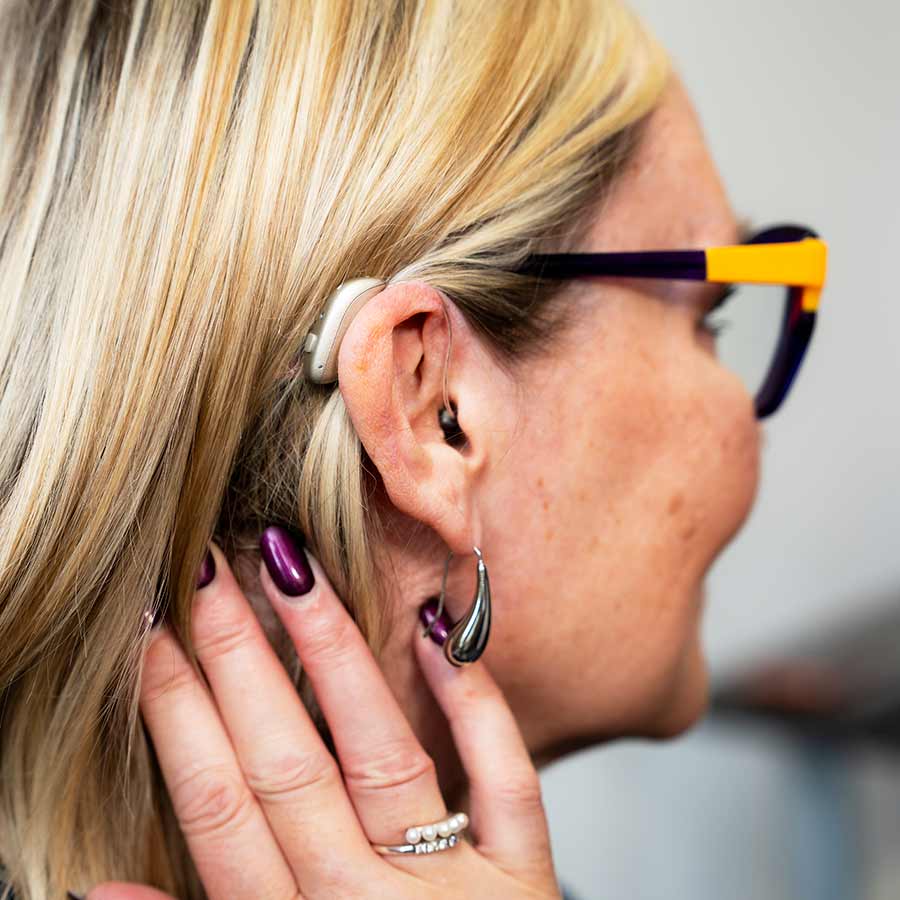
Receiver-in-canal (RIC) and behind-the-ear (BTE) devices remain the most widely available rechargeable hearing aid styles.
Rechargeable technology is now also available in selected in-the-ear models. These can combine a discreet, custom or instant-fit design with rechargeable power, although the choice is more limited than with behind-the-ear devices.
Availability will depend on:
- Your type and level of hearing loss
- The shape and size of your ears
- Your preferred fitting style
- The manufacturer and model
- The features you require
Your audiologist will explain which rechargeable options are suitable for you.
Easier to handle
Rechargeable hearing aids can be especially helpful if you find small disposable batteries difficult to manage.
They may suit people with:
- Reduced dexterity
- Arthritis
- Hand tremors
- Limited grip or fine-motor control
- Reduced eyesight
Charging usually involves placing the devices into clearly marked charging slots rather than opening a small battery compartment.
However, some chargers and hearing aids are easier to handle than others. Your audiologist can demonstrate the options and make sure you feel confident using them before you decide.

Invisible or behind-the-ear hearing aids?
| Rechargeable hearing aids | Disposable-battery hearing aids |
|---|---|
| Charge the devices regularly, usually overnight | Replace the batteries when they run out |
| No routine handling of small batteries | Small batteries can be changed immediately |
| Often provide a full day of typical use | Batteries commonly last several days |
| Streaming may shorten use between charges | Streaming can shorten disposable-battery life |
| Require a charger and access to power | Spare batteries can be carried easily |
| Portable charging cases are available for selected models | Convenient during extended travel or power cuts |
| Reduce the number of disposable batteries used | Used batteries require safe storage and recycling |
| Internal battery may eventually require professional replacement | Batteries are replaced by the wearer |
| Widely available in RIC and BTE styles, with selected in-ear options | Available across a broader range of very small styles |
How long do disposable hearing aid batteries last?
Disposable hearing aid batteries generally last between a few days and around two weeks. The actual lifespan depends on the battery size, your hearing settings, daily wear time and use of wireless features.
To conserve power, disposable-battery hearing aids should usually be switched off when they are not being worn. Depending on the model, this may involve opening the battery compartment overnight.
Button batteries can be dangerous if swallowed, so they must always be stored securely away from children and pets and recycled responsibly after use.
Benefits of rechargeable hearing aids
Rechargeable hearing aids can offer:
- No routine disposable-battery changes
- A simple overnight charging routine
- All-day use with many models
- Easier handling for people with limited dexterity
- Portable charging options
- Fewer single-use batteries to buy, store and recycle
- A sealed design on many models
- A choice of modern digital and Bluetooth® features
Available benefits vary between products, and not every rechargeable hearing aid includes Bluetooth or a portable charger.


Things to consider before choosing
Rechargeable hearing aids may not be the right choice for everyone. Before deciding, consider:
- Whether you can charge them reliably every night
- How much audio you expect to stream
- Whether you travel frequently or spend long periods away from power
- How you would manage during a power cut
- Whether a portable charging case is included or costs extra
- Whether your preferred hearing aid style is rechargeable
- How the internal battery is serviced or replaced
- What the charger and battery warranty covers
Keeping a portable power bank or travel charger may provide useful reassurance when you are away from home.
Are rechargeable hearing aids cheaper over time?
Rechargeable hearing aids can reduce or remove the ongoing cost of disposable batteries. However, the overall cost depends on the hearing aid price, the charger included and whether the internal battery eventually needs servicing or replacement.
Your audiologist can explain what is included in your hearing-care package so that you can compare the long-term cost accurately.


Are rechargeable hearing aids more environmentally friendly?
Rechargeable models can substantially reduce the number of single-use batteries that need to be manufactured, packaged and recycled during the life of the hearing aids.
Their complete environmental impact also depends on factors such as manufacturing, electricity use and eventual disposal. It is therefore more accurate to say that rechargeable hearing aids reduce disposable-battery waste rather than describing every model as environmentally friendly.

Find your local practice
We have over 480 practices across the UK, with a growing network and more practices opening all the time.
Find your nearest Amplify Hearing practice and arrange to see your local independent, qualified audiologist. Our hearing care professionals will build a relationship with you, taking the time to make sure you get the very best advice and the most from your hearing aids. When we talk through your hearing options with you, you’re guaranteed to receive unbiased hearing advice you can trust.