
Modern hearing aids can be remarkably small. Some fit completely inside the ear canal, making them virtually invisible when worn—without compromising the personalised support you need to hear more clearly.
At Amplify Hearing, we offer discreet hearing aids from leading manufacturers. Your audiologist will help you find the right balance of appearance, comfort, performance and everyday practicality.
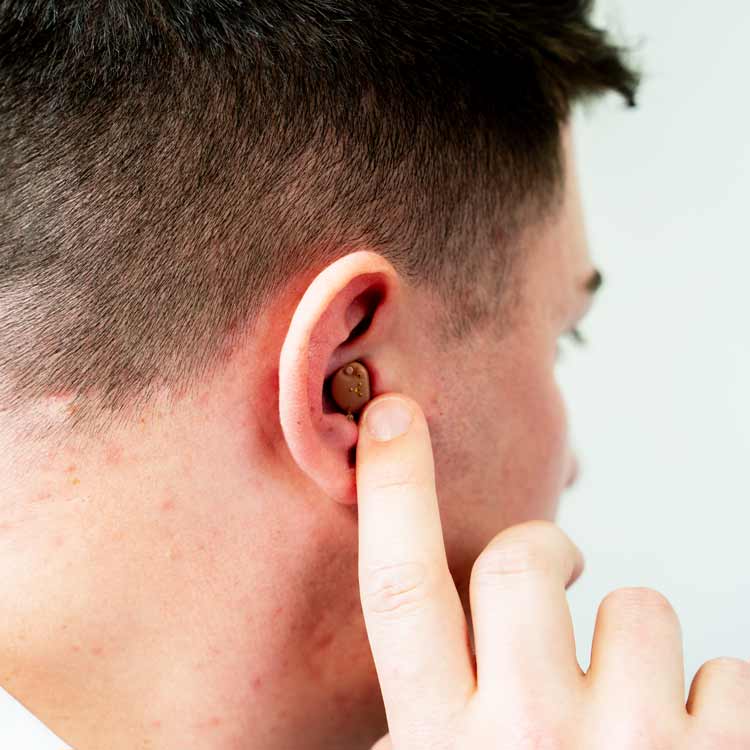
What are invisible hearing aids?
Invisible hearing aids are small digital devices worn inside the ear canal. Unlike traditional behind-the-ear hearing aids, they have no external case, tube or wire.
The two smallest styles are:
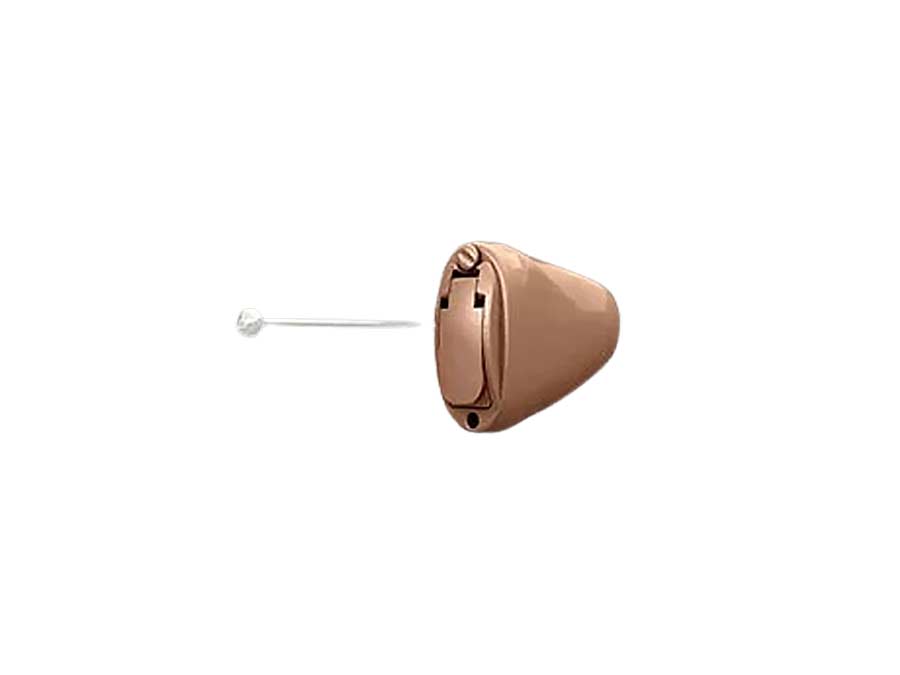
Invisible-in-the-canal hearing aids
Invisible-in-the-canal (IIC) hearing aids sit deepest inside the ear canal. They are the smallest and most discreet hearing aid style and can be virtually unnoticeable when worn.
Their deep position can also help protect the microphones from wind noise. However, their tiny size means they may have fewer manual controls and a smaller battery than larger hearing aids.
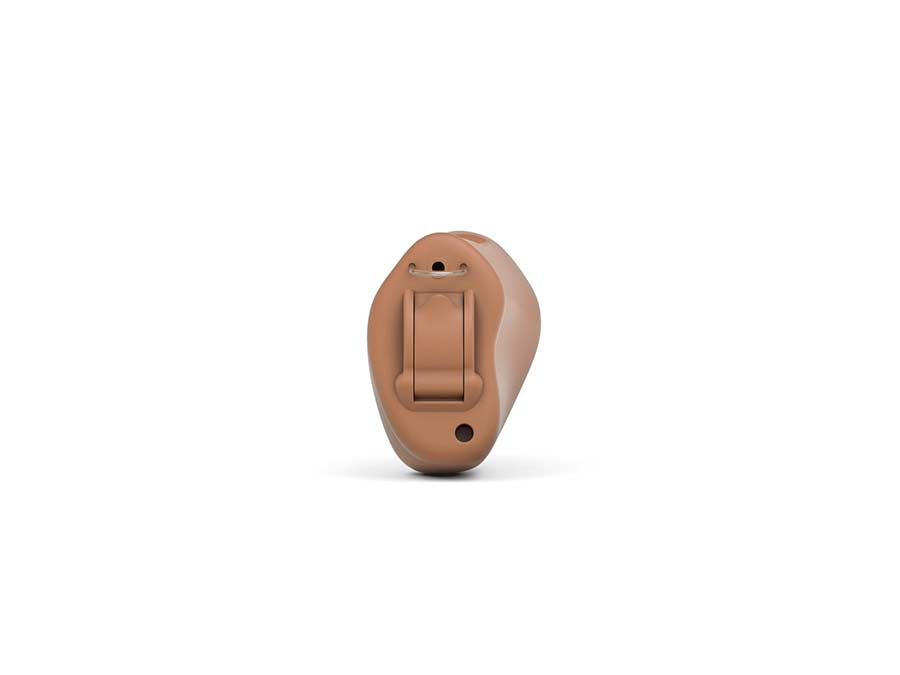
Completely-in-the-canal hearing aids
Completely-in-the-canal (CIC) hearing aids also sit inside the ear canal but are positioned slightly closer to its entrance. A small faceplate or removal cord may be visible when someone looks directly into the ear.
Because CIC hearing aids are slightly larger than IIC models, some can accommodate additional controls or features while remaining highly discreet.
Custom-made or instant-fit?
Many invisible hearing aids are custom-made using an impression or digital scan of your ear. The resulting shell follows the individual shape of your ear canal, helping to provide a secure and comfortable fit.
Some models are available with flexible instant-fit sleeves and may be fitted without creating a custom shell. The most appropriate option will depend on your ear anatomy, hearing profile and personal preferences.
No hearing aid can be guaranteed to feel comfortable for everyone. Your audiologist will check the fit carefully and make adjustments where possible.

Are invisible hearing aids really invisible?
IIC hearing aids can be extremely difficult to see because they sit deep within the ear canal. CIC models are also very discreet, although a small part may be visible from certain angles.
How noticeable they are will depend on:
- The size and shape of your ear canal
- The model and fitting style
- How deeply the hearing aid can be positioned safely
- The angle from which your ear is viewed
Your audiologist can show you suitable styles and explain how each would sit in your ear.
The benefits of invisible hearing aids
Depending on the model and your individual fitting, invisible hearing aids may offer:
- A small, discreet appearance
- No external wires or tubes
- A personalised fit
- Reduced exposure to wind noise
- Natural use of the shape of your outer ear
- Comfortable use with glasses
- Convenient use with many telephones and headsets
- Automatic adjustment on compatible models
The benefits you experience will depend on your hearing loss, ear anatomy and chosen technology.


Things to consider
The smallest hearing aid is not automatically the best hearing aid. Before choosing an IIC or CIC model, it is important to consider the possible trade-offs.
Very small hearing aids may:
- Be unsuitable for some levels or types of hearing loss
- Be difficult to insert, remove or clean if you have limited dexterity
- Use smaller batteries that need changing more frequently
- Be more exposed to earwax and moisture
- Have fewer manual controls
- Offer fewer rechargeable or Bluetooth® options
- Lack some features available in larger hearing aids
- Be unsuitable for very narrow or unusually shaped ear canals
Your audiologist will explain which of these considerations apply to the models available to you.
Invisible or behind-the-ear hearing aids?
Invisible hearing aids sit within the ear canal, while behind-the-ear (BTE) and receiver-in-canal (RIC) hearing aids place some of their components behind the ear.
The right choice depends on more than appearance.
| Invisible IIC or CIC hearing aids | BTE or RIC hearing aids | |
|---|---|---|
| How they are worn | Sit inside the ear canal | Sit discreetly behind the ear |
| How they look | No visible external wire or tube | Usually use a thin tube or receiver wire |
| Sound considerations | Can reduce exposure to wind noise | Often offer directional microphones and advanced noise processing |
| Functionality | May have fewer controls and connectivity features | Frequently available with Bluetooth® and rechargeability |
| Power | Small batteries on many models | Larger or rechargeable batteries are widely available |
| Routine handling | Can be difficult to handle | Often easier to insert, remove and maintain |
| Hearing loss suitability | May suit mild to moderate hearing loss | Suitable options are available for a wider range of hearing losses |
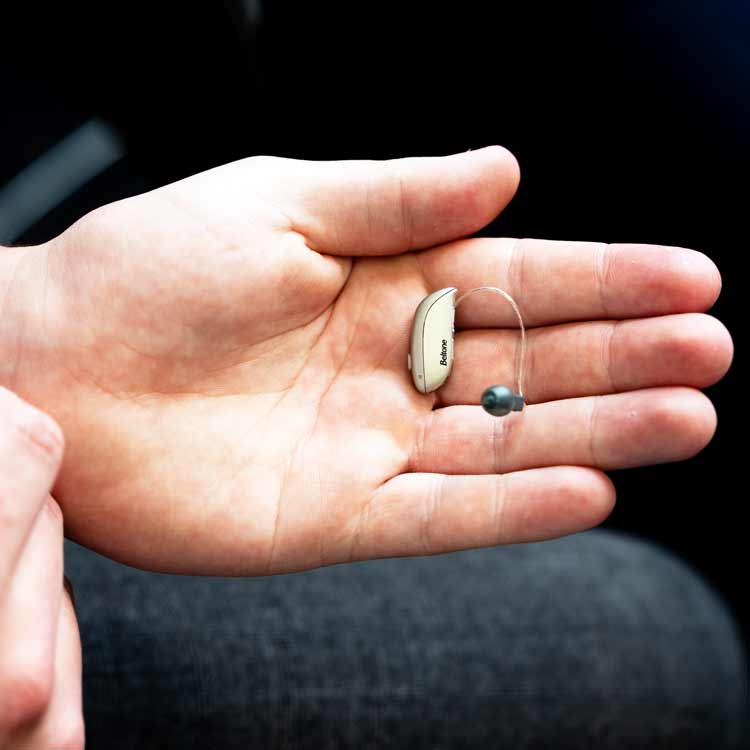
Modern RIC hearing aids can also be extremely discreet. Their small casing sits behind the ear, while a fine wire leads to the ear canal. For some people, this style offers a better combination of discretion, comfort and technology than an invisible hearing aid.
Will an invisible hearing aid feel different?
Because an IIC or CIC hearing aid sits inside the ear canal, you may initially be more aware of it or experience a slightly blocked sensation. This often becomes less noticeable as you adjust to wearing the device.
A secure fit is important for comfort and sound quality, but it should not cause pain. If your hearing aid feels uncomfortable, your audiologist can check its position and fit.


Which discreet hearing aid is best for me?
There is no single style that is right for everyone. Your audiologist will consider:
- Your hearing test results
- The size and shape of your ear canals
- Your ear health and earwax levels
- Your ability to handle a very small device
- The environments in which you need help hearing
- Whether you want Bluetooth® or rechargeable technology
- Your preferences for appearance and comfort
- Your budget
As an independent hearing-care provider, Amplify Hearing can compare suitable devices from leading manufacturers and recommend the option that best matches your needs.

Find your local practice
We have over 480 practices across the UK, with a growing network and more practices opening all the time.
Find your nearest Amplify Hearing practice and arrange to see your local independent, qualified audiologist. Our hearing care professionals will build a relationship with you, taking the time to make sure you get the very best advice and the most from your hearing aids. When we talk through your hearing options with you, you’re guaranteed to receive unbiased hearing advice you can trust.